
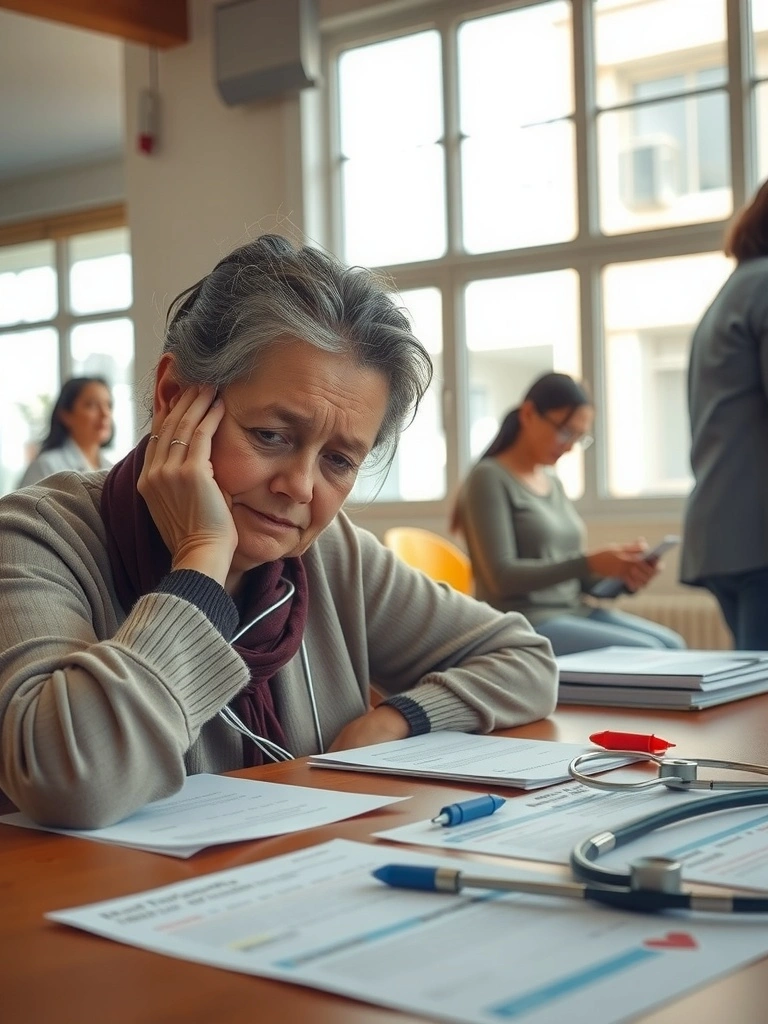
Physical Symptoms, Participation in Volunteer Services, Blurred Vision: Common Visual Impairment Adjustments and Self-Protection Strategies in Volunteer Services
Menopause is an important stage of physiological changes in the human body, during which both men and women may experience a series of physiological and psychological challenges. These changes not only affect daily life but also pose practical difficulties for middle-aged and older individuals actively participating in volunteer services. This article will start from the common physical symptoms experienced by men and women during menopause, combining them with the practical settings of volunteer work to delve into the common yet often overlooked issue of blurred vision. It will explore possible causes, professional adjustment strategies, self-protection methods, and various non-medical and medical solutions, aiming to assist volunteers in utilizing professional methods to enhance their work quality and wellbeing.
1. Physical Symptoms Related to Menopause and Blurred Vision
1. Physiological Changes Induced by Menopause
Both men and women experience endocrine changes during menopause, which may result in significant alterations in psychological and cognitive aspects as well as in the physiological structure of the eyes. In women, ovarian function declines during menopause, leading to decreased estrogen secretion, which affects tear gland secretion, intraocular pressure, and retinal health; for men, decreased testosterone affects blood circulation, potentially leading to microvascular diseases in the visual system, which should not be underestimated.
2. Common Causes of Blurred Vision
Common causes of blurred vision attributed to menopause include:
- **Dry Eye Syndrome**: Hormonal changes lead to reduced tear secretion, causing insufficient lubrication on the surface of the eyeball.
- **Abnormal Intraocular Pressure**: Women in menopause experience increased risk of glaucoma due to hormonal changes; men may face unstable intraocular pressure due to complications from metabolic syndrome.
- **Retinal Degeneration**: Macular degeneration and unstable blood flow in the retina can easily cause temporary or persistent visual field loss.
- **Presbyopia and Cataracts**: As individuals enter middle and older age, the elasticity of the lens decreases, making presbyopia and cataracts common starting from the menopausal stage.
- **Medication Side Effects**: Some commonly used medications during menopause (e.g., hormone replacement therapy, sleeping pills) can indirectly affect ocular sensations.
- **Autonomic Nervous Dysfunction**: During hormone adjustment, dysfunction of the autonomic nervous system can lead to abnormal ocular blood vessels and poor regulation of the optic nerve, causing visual anomalies.
2. Real Challenges and Phenomena in Volunteer Service Settings
In volunteer services, whether in community care, companionship for the elderly, child education, or environmental advocacy, visual acuity is an indispensable basic requirement. The service environment can be complex, such as insufficient indoor lighting, high demands for data discernment, dazzling glare outdoors, and the need to identify details like medication labels, written documents, and environmental objects. Any slight visual impairment can potentially compromise service quality or even lead to accidents. For example:
- **In nursing homes, volunteers may need to help elderly individuals with medication management**; if vision is blurred, they may misidentify medications, jeopardizing health.
- **During tutoring sessions for school children, reading fine print on the blackboard or assisting with writing**; a blurred visual field significantly reduces service efficiency.
- **Participating in outdoor environmental patrols requires recognizing obstacles and minor trash indicators**; failing to notice these can easily result in accidents.
- **Assisting individuals with visual impairments while having visual obstacles can cause distress and anxiety, affecting service attitude and performance.**
3. Self-Assessment and Expert Recommendations for Menopausal Visual Impairments
1. Details of the Self-Evaluation Process
Volunteers experiencing menopause can assess their visual state using the following methods:
- **Self-testing with vision charts**: Regularly check the uncorrected and corrected vision of both eyes using international standard vision charts.
- **Dry eye symptom scoring**: Evaluate for sensations of foreign bodies, stinging, itching, and fatigue.
- **Black and white contrast sensitivity tests**: Test changes in the ability to recognize small details.
- **Dynamic visual field simple checks**: Close one eye while moving the head, noting when peripheral objects become obscured or blurred.
- **Night vision tests**: Record changes in vision while reading or walking under low light conditions.
2. Expert Recommendations and Literature Analysis
Medical research indicates that regular comprehensive eye exams from an ophthalmologist (recommended every 6-12 months) can facilitate early detection of menopause-related visual degeneration. The International Council of Ophthalmology advises volunteers over 45 to have their fundus and intraocular pressure checked every six months, especially if they have a family history of diabetes, hypertension, or cardiovascular diseases. Additionally, expert literature advocates that volunteers should receive visual function training and recommendations for individual assistive tools, including magnifiers, good lighting, and low-vision aids.
4. Visual Impairment Adjustments and Self-Protection Strategies in Volunteer Service Settings
1. Adjustments in Workflow and Scene Details
(1) **Environmental Optimization**:
- Choose **high color rendering LED lighting** (Color Rendering Index CRI above 90), avoiding direct yellow or blue light.
- Use adjustable desk lamps to avoid backlighting and strong contrasts that can cause glare or shadows.
- Auxiliary labels can be marked with **high contrast colors (e.g., yellow background with black text)** to reduce reading burden.
(2) **Document Handling**:
- Print volunteer handbooks or lists in **font sizes 16-18** for easier recognition.
- Use magnifiers and enlargers to assist in detail recognition.
- It is recommended to enlarge electronic documents on screens to 120-150%, while maintaining high brightness and blue light filters.
(3) **Activity Step Adjustments**:
- Plan to take a 5-minute break every half hour to gaze at objects 20 meters away.
- If long outdoor walks are required, wearing polarized sunglasses is advised to reduce glare.
- Regularly update prescription glasses, undergoing vision tests and corrections annually.
2. Personal Protection and Self-Assistance Measures
(1) **Protective Eyewear**: Always wear ANSI Z87.1 compliant protective glasses in outdoor patrols or areas prone to dust, reducing the risk of foreign bodies entering the eyes and protecting against UV damage.
(2) **Artificial Tears Usage Process**: Keep preservative-free artificial tears in single-use packaging on hand; instill 1-2 drops before each volunteer task and replenish as necessary to alleviate dry eye discomfort.
(3) **Correct Eye Usage Habits**: Implement the 20-20-20 rule: after every 20 minutes of screen use, look at something 20 feet away for 20 seconds, and move the eyes around to promote circulation.
(4) **Self-Relaxation and Audio Therapy Assistance**: Use pure tones of 440Hz or 528Hz positive gain frequencies, and spend 10-15 minutes daily in a quiet moment, eyes closed, listening to promote nerve relaxation and decrease eye strain and fatigue.
3. Adjustments for Volunteer Team Collaboration
- Team leaders should proactively understand team members' physical states and appropriately assign tasks that are easier to identify.
- Standardize color usage and notation methods for clear guidance and color-coded management (e.g., red for danger and green for safety).
- Plan clear strategies for going up and down stairs and dealing with obstacles, such as adding yellow anti-slip strips to height differences or placing temporary signs as reminders.
5. Non-Medical and Natural Remedies
1. Dietary Adjustments
- Supplement with foods rich in **OMEGA-3 fatty acids** (e.g., flaxseed oil, deep-sea fish oil) to aid ocular microcirculation and combat inflammation.
- Increase intake of dark leafy greens like spinach and kale, which are rich in lutein and zeaxanthin.
- Moderately consume goji berries, loquats, and blueberries, all of which are beneficial for maintaining retinal function.
2. Eye Care Exercise Details
- Perform eye rotation exercises: close eyes and rotate in clockwise and counterclockwise directions ten times each.
- Daily tap the temples moving towards the ears to promote blood circulation.
- After rubbing palms together to generate heat, apply them as warm compresses over the eyes for about three minutes to relieve tightness and dryness.
3. Aromatherapy
- Select essential oils with relaxing effects (e.g., lavender, sweet orange, geranium) to diffuse in a diffuser for 30 minutes daily, which can indirectly relieve visual nerve pressure and psychological anxiety.
4. Creating a Quality Sleep Environment
- Shut off electronic screens one hour before bedtime to avoid blue light affecting melatonin secretion.
- Maintain a dark, quiet, and comfortably warm sleeping environment to aid in the repair of visual nerves.
6. Medical Advice and Advanced Treatment Options
1. Medication and Medical Assistance
- If non-medical treatments are ineffective, it is advisable to consult a specialist to assess the suitability of **Hormone Replacement Therapy (HRT)** to alleviate dry eyes and visual anomalies caused by hormonal imbalances.
- If necessary, consider prescribing neuroprotective ocular hypotensive medication, particularly for those prone to glaucoma.
- Early-stage cataracts may be managed with antioxidant medications to delay progression, while late-stage cases may require minimally invasive surgical removal.
- For those with concurrent metabolic syndrome and abnormal blood pressure, treatment for foundational chronic diseases should also be addressed.
2. Progressive Eye Rehabilitation
- Regularly participate in visual function rehabilitation courses, such as specialized guidance at “Low Vision Rehabilitation Centers,” including contrast training, visual localization training, mobility training, and daily self-care.
3. Regular Monitoring and Health Management
- Utilize wearable health tracking devices to monitor blood pressure and blood sugar continually, reducing visual impairment risks from poor peripheral microcirculation.
- Continuously track visual field maps and fundus photography at designated ophthalmological medical institutions to detect issues early.
7. Self-Improvement and Psychological Adjustment
1. Family and Peer Support
- Communicate actively with family members and fellow volunteers, openly discussing visual changes and seeking assistance to avoid embarrassment and pressure.
- Encourage participation in peer support groups to share experiences of visual adaptation during menopause, mitigating feelings of loneliness and helplessness.
2. Learning Emotional Regulation
- Employ mindfulness meditation practices, dedicating 20 minutes daily to focusing on breathing to relieve anxiety and boost confidence.
- Set small personal goals, such as recording and improving visual-related details of life each month, to gradually cultivate adaptive capabilities.
3. Utilizing Technology to Assist Daily Life
- Familiarize oneself with voice reading and magnifier functions on smartphones and tablets to reduce reading burdens.
- Make good use of visual impairment assistance apps (e.g., Be My Eyes, Seeing AI) for real-time help in detail recognition.
8. Ultimate Action Guidance and Practice Checklist
To enhance safety and efficiency for menopausal volunteers individually and as a team, it is recommended to establish the following daily check and adjustment habits:
1. Wear appropriate glasses or assistive tools daily.
2. Check if artificial tears, magnifiers, and lighting equipment are ready before beginning activities.
3. Implement the 20-20-20 visual protection method, taking breaks and gazing at distant objects every two hours.
4. Regularly revisit ophthalmology for friendly reminders among team members to jointly monitor visual health and symptom changes.
5. If experiencing sudden changes in vision, immediately cease delicate or high-risk tasks and seek the team leader's assistance in adjusting responsibilities if necessary.
In summary, the blurred vision and related visual impairments brought on by menopause should be actively adjusted through diverse professional methods. This includes combining self-protection of the body, medical care, and psychological self-help strategies, closely integrating personal needs with volunteer service processes to balance health and contribution, sustainably embodying the spirit of volunteering into senior years.