
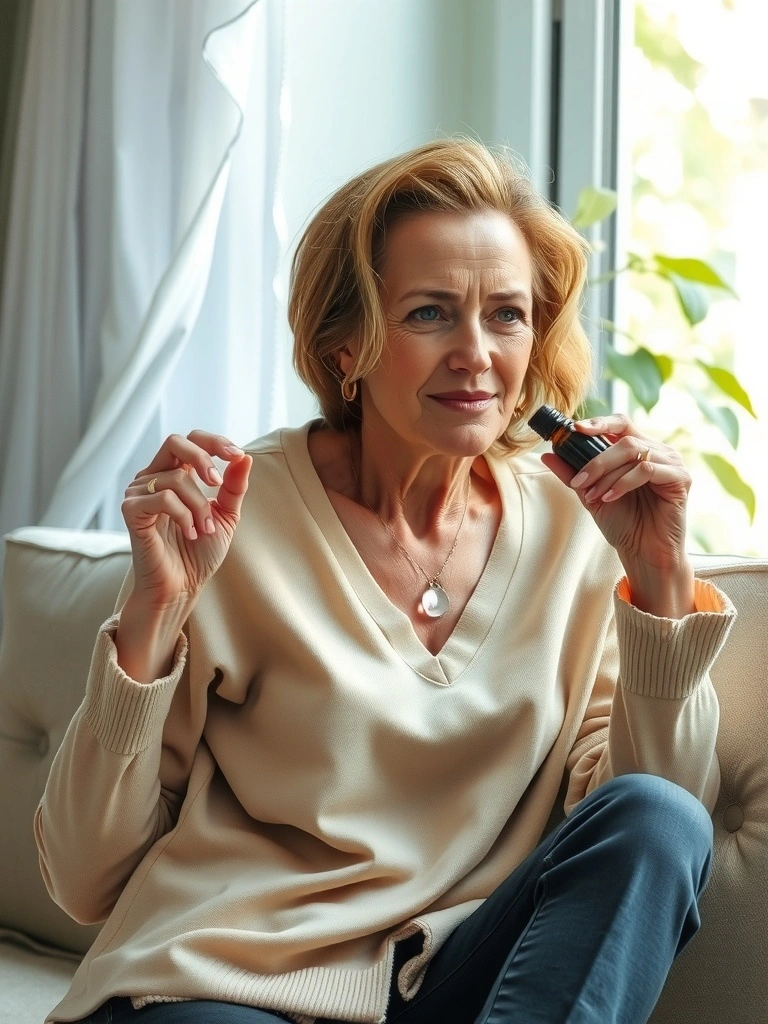
Aromatherapy and Edema Related to Endocrine System Issues in Menopause: Clinical Perspectives and Multimodal Therapy Analysis of Essential Oil Strategies for Balancing Bodily Swelling
I. Overview of Menopause and Endocrine System Issues
Menopause is an important milestone in the stage of life toward maturity, where both males and females may experience diverse physical and mental symptoms due to significant fluctuations in the endocrine system. For women, menopause often results from the degradation of ovarian function, leading to a rapid decline in the secretion of estrogen and progesterone, which affects the menstrual cycle, temperature regulation, emotional stability, and overall physiological balance. Men may enter male menopause (also called partial androgen deficiency) approximately between the ages of 40 to 60, characterized by emotional instability, memory decline, decreased physical fitness, and other sexual function symptoms. The endocrine system, as a "silent conductor," regulates overall metabolism, water and salt metabolism, and fluid balance; any fluctuations can lead to bodily edema, limb swelling, and the accumulation of interstitial fluid in multiple tissues.
II. Causes of Edema Under Endocrine Imbalance
1. Estrogen and Progesterone Imbalance (Common in Women)
During the decline of ovarian function, estrogen levels drop significantly, causing the kidneys to increase water and sodium reabsorption, enhancing water and salt storage, which leads to increased interstitial fluid in tissues, resulting in edema of the limbs, eyelids, and even the abdomen. Some women may also experience breast swelling and sensitivity.
2. Decreased Androgens (Common in Men)
Testosterone plays a crucial role in maintaining vascular permeability and tissue fluid dynamics. As men enter middle to old age, testosterone significantly decreases, which can lead to water metabolism imbalances and associated abdominal edema and swelling in the lower limbs; lifestyle factors or medications (such as antihypertensives) may exacerbate this phenomenon.
3. Thyroid Hormone Abnormalities
Any gender experiencing menopause, if accompanied by reduced thyroid hormones (such as hypothyroidism), can cause decreased basal metabolic rates, slowing lymphatic circulation, and hampering fluid elimination, leading to sticky edema in the face and limbs.
4. Other Hormonal Fluctuations
Abnormal secretion of hormones such as adrenal cortisol and antidiuretic hormones can also cause water regulation disorders at different levels, further increasing the likelihood of edema occurrence.
III. Foundations and Evidence-Based Concepts of Aromatherapy
Aromatherapy is a natural healing intervention based on the scientific selection of specific plant-extracted essential oil components. It guides the self-regulation of the endocrine, immune, circulatory, and emotional systems through olfactory and transdermal absorption pathways. Over the past decade, literature has indicated that aromatherapy significantly improves hormonal balance, renal water regulation, and emotional relief. This method is applicable to both genders and serves as a safe adjunct therapy for a variety of menopausal symptoms.
IV. Professional Implementation Plan for Aromatherapy in Menopausal Edema
1. Essential Oil Selection and Efficacy Analysis
- Grapefruit Essential Oil (Citrus paradisi)
Contains large amounts of limonene and furanocoumarins, which help promote lymphatic circulation, diuresis, and fat metabolism, enhancing the kidneys' and tissues' ability to redistribute fluids, thus reducing edema. It is recommended for use in an aroma diffuser or diluted in 10 ml of carrier oil with 2-3 drops for local massage.
- Juniper Berry Essential Oil (Juniperus communis)
Rich in monoterpenes and juniperene, it has properties that promote renal drainage and anti-inflammation. When massaged on the knees and ankles during meridian therapy, it helps relieve swelling in the lower limbs; a 2% dilution in carrier oil is recommended for practice 2-3 times a week for 20 minutes each session.
- Geranium Essential Oil (Pelargonium graveolens)
Has strong hormone-regulating properties while simultaneously improving mood and promoting blood circulation, effectively alleviating the physical and mental burdens caused by endocrine fluctuations. A 20% solution in an essential oil balm can be applied to swollen areas of the chest, abdomen, and limbs 1-2 times daily.
- Frankincense Essential Oil (Boswellia carterii)
Noteworthy for its anti-inflammatory and anxiety-relieving effects, it also enhances renal and liver metabolic functions. Suitable methods include diffusion or foot baths (5 drops of frankincense essential oil in 2 liters of 40°C warm water, 2-3 times a week).
2. Use Process and Scene Description
In a home setting, most patients can combine aroma lamps for diffusion, essential oil baths, and local massage. Before bedtime, lighting an aroma lamp in the bedroom and adding 5-8 drops of grapefruit or geranium essential oil while practicing calming breathing for 20-30 minutes; in the morning or after showering, use a massage oil (grapefruit or juniper essential oil diluted in carrier oil) to gently massage swollen areas to stimulate circulation; complemented by a step-wise lymphatic drainage technique applying pressure from distal to central areas, promoting lymphatic return, and lying with legs elevated for 10-15 minutes for drainage.
3. Sound Therapy Combined with Aromatherapy
Selecting 432Hz natural frequency music (to harmonize kidney and parasympathetic nervous system) as a background for deep relaxation during aromatherapy can guide brain waves into an alpha state, enhancing endocrine regulation effectiveness. It is suggested to practice this once daily for 30 minutes, continuing for 1-3 months as a complete cycle.
V. Recommendations from Clinical Experts and Integration of Multimodal Adjunct Therapies
1. Dietary Adjustments
It is recommended to reduce intake of high-salt and high-fried foods, increase fresh fruits and vegetables, and consume antioxidant-rich nuts and dark leafy greens to enhance renal excretion and antioxidant capacity. Drinking natural diuretic beverages such as lemon water or job's tears water and consuming 2000-2500 ml of fluids daily is advisable.
2. Soothing Exercises
Activities such as yoga, tai chi, and slow walking can enhance overall blood circulation and reduce edema. Practicing for 30-45 minutes daily during moderate temperatures in the morning or afternoon can significantly improve interstitial fluid retention.
3. Emotional and Stress Management
Mindfulness meditation is recommended to release internal stress and reduce cortisol (stress hormone) secretion resulting in water and salt retention. Combining essential oil sachets with stabilizing oils like turmeric and frankincense can enhance comfort during meditation or sleep.
4. Professional Medical Intervention Guidance
If self-management does not yield improvement, consulting an endocrinologist for evaluations, including hormone concentration measurement, renal function tests, and thyroid function assessments, is recommended. Based on the physician's recommendations, pharmacological treatments such as necessary hormones or diuretics may be undertaken. Aromatherapy can serve as an adjunct but should not replace medical intervention.
VI. Creative Applications of Aromatherapy for Male and Female Menopausal Edema and Self-Improvement Suggestions
1. Personalized Journaling
Daily records of essential oil types, usage times, methods, and changes in edema, while tracking emotional and stress levels, can help quantify aromatherapy effectiveness and allow for adjustments as needed.
2. Community Support and Knowledge Sharing
Participating in relevant self-care communities to exchange various aromatherapy recipe experiences can improve self-care knowledge and enhance quality of life.
3. Optimizing Living Environments
Extending aromatherapy to the office, vehicles, and bathing areas to make aromatic molecules part of daily tools for regulating life stress. Consider placing a small sachet filled with activated bamboo charcoal infused with essential oils in the workspace to reduce elevated stress hormones.
4. Adjustment of Intimate Relationships
Regardless of gender, menopause often accompanies personality fluctuations and increased stress; partners are encouraged to regularly engage in combined aromatherapy massage experiences and practice active listening to help each stabilize their endocrine systems and reshape their life rhythms.
VII. Detailed Symptom Resolution Solutions and Analysis
1. For Abdominal and Lower Limb Edema——Grapefruit + Juniper Essential Oil Massage:
After bathing each evening, mix 3 drops of grapefruit and 2 drops of juniper in 15 ml of sweet almond oil and thoroughly mix. Massage from the ankles to the knees for 20 minutes to help lymphatic return and fluid elimination, 3-4 times a week.
2. For Facial or Eyelid Edema——Geranium Essential Oil Cold Compress:
Add 1 drop of geranium essential oil to 200 ml of cold boiled water, soak a cloth and apply to the eyes or swollen areas for 10 minutes, which can significantly relieve morning edema and improve skin elasticity; a daily morning session is recommended.
3. Emotional Fluctuations Accompanied by Edema——Frankincense Essential Oil Deep Breathing Therapy:
When experiencing low mood or swelling in the lower limbs in the afternoon, add 5 drops of frankincense essential oil to an aroma diffuser, practicing slow deep breathing for 15-20 minutes to activate the parasympathetic nervous system and balance fluid distribution; this is suggested for every afternoon or during peak stress periods.
4. Mild Systemic Edema Associated with Hypothyroidism——Aromatic Bathing Method:
In a bathtub filled with water at 40 degrees, add 5 drops of geranium, 3 drops of frankincense, and 1 cup of natural sea salt, soak for 15 minutes, then gently dry; this helps overall circulation and bile metabolism. Practicing 2-3 times a week can yield improvements.
VIII. Future Prospects for Integrating Aromatherapy with Traditional Medicine and Pathways for Self-Improvement
With increasing emphasis on non-invasive therapy in modern society, aromatherapy has proven its auxiliary value in regulating endocrine and edema issues. Each aromatic breath carries the biochemical wisdom nurtured by the earth, coupled with gentle physical massage and mental relaxation, naturally guiding the body back to balance. It is recommended that individuals experiencing menopause integrate aromatherapy into their daily lives, under self-understanding and physician guidance, allowing for daily realization of personal changes and learning to embrace health at a more natural, gentle pace. Comprehensive and detailed aromatherapy not only relieves edema but also helps the mind, body, and spirit enter a clear and transparent new realm.